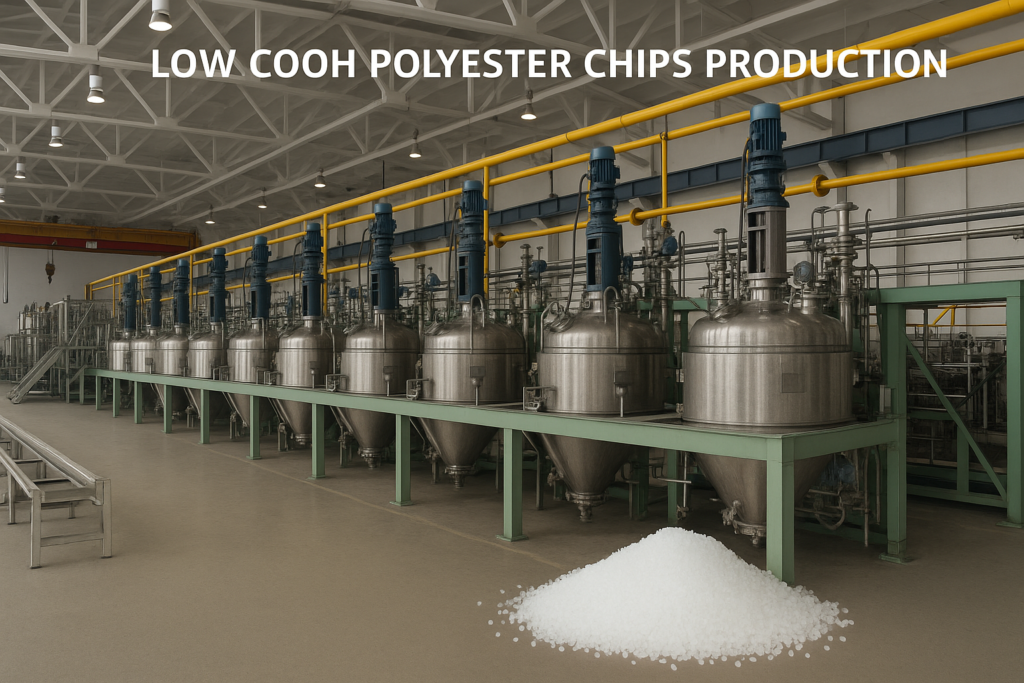

As demand grows for higher quality, more stable, and environmentally friendly polyester yarns, low carboxyl end group (COOH) polyester chips are becoming the material of choice, especially in the production of semi-dull mother yarn.
At HanLink Polyester, we’ve worked closely with fiber manufacturers to understand what really matters during spinning and downstream processing. Here’s why switching to low COOH chips (COOH ≤ 8 eq/ton) can make a measurable difference in your production.
1. Superior Polymer Properties for a More Reliable Process
Low-COOH chips offer much better thermal stability during processing. With fewer reactive end groups, polymer chains are less likely to break down, which means:
- Lower risk of hydrolysis during high-temperature operations or long storage.
- Fewer degradation byproducts like acetaldehyde, resulting in cleaner fiber odor and improved surface finish.
- Reduced gel formation, crystallization spots, and black specks — critical for stable high-speed spinning.
- More consistent melt flow, which is ideal for fine-denier split yarns in POY and FDY processes.
- Fewer fly yarns and breakages — improving production efficiency and reducing waste.
2. Optimized Mother Yarn Production
Customers have reported noticeable improvements in spinning line performance when using our low COOH chips:
- Longer spinneret life, thanks to reduced degradation at the nozzle.
- Lower risk of filter clogging, minimizing production downtime.
- A more uniform melt, which ensures a perfect fiber cross-section, is essential for later splitting into fine-denier filaments.
- Reduced cleaning needs, which translates into lower energy consumption and maintenance costs.
3. Better Final Yarn Quality
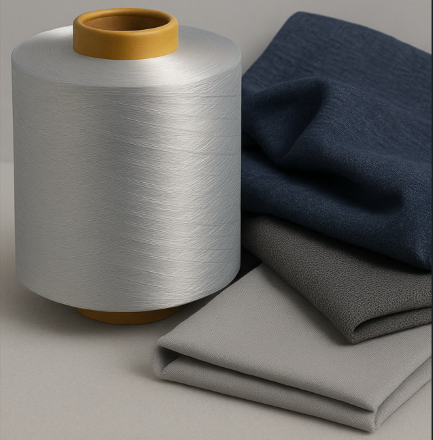
Using low COOH chips improves the overall performance of the finished yarns:
- Higher tensile strength due to a stable molecular structure.
- Improved evenness and reduced hairiness, which is crucial for split yarns in the 40D–75D range.
- Excellent dimensional stability during downstream weaving and heat-setting, reducing shrinkage and deformation.
- More uniform dyeing performance, especially for semi-dull yarns, due to consistent TiO₂ dispersion.
4. Sustainability and Broader Application Potential
Sustainability is no longer optional — it’s a must. Low COOH chips help you stay ahead:
- Lower acetaldehyde emissions, meeting stringent standards like OEKO-TEX® and REACH.
- Suitable for producing functional yarns such as UV-resistant, anti-bacterial, or bicomponent fibers.
- Versatile enough for use in microfiber mother yarns, hot-air nonwoven fibers, moisture-wicking yarns, and even high-stretch DTY.
Final Thoughts
If you’re producing mother yarn or other advanced fibers, switching to low-COOH polyester chips could be a game-changer. It means more stable spinning, fewer defects, better yarn performance, and greater confidence in your end product.
Want to know more about how low-COOH chips can fit into your production line? We’re here to support you with tailored technical advice and samples.