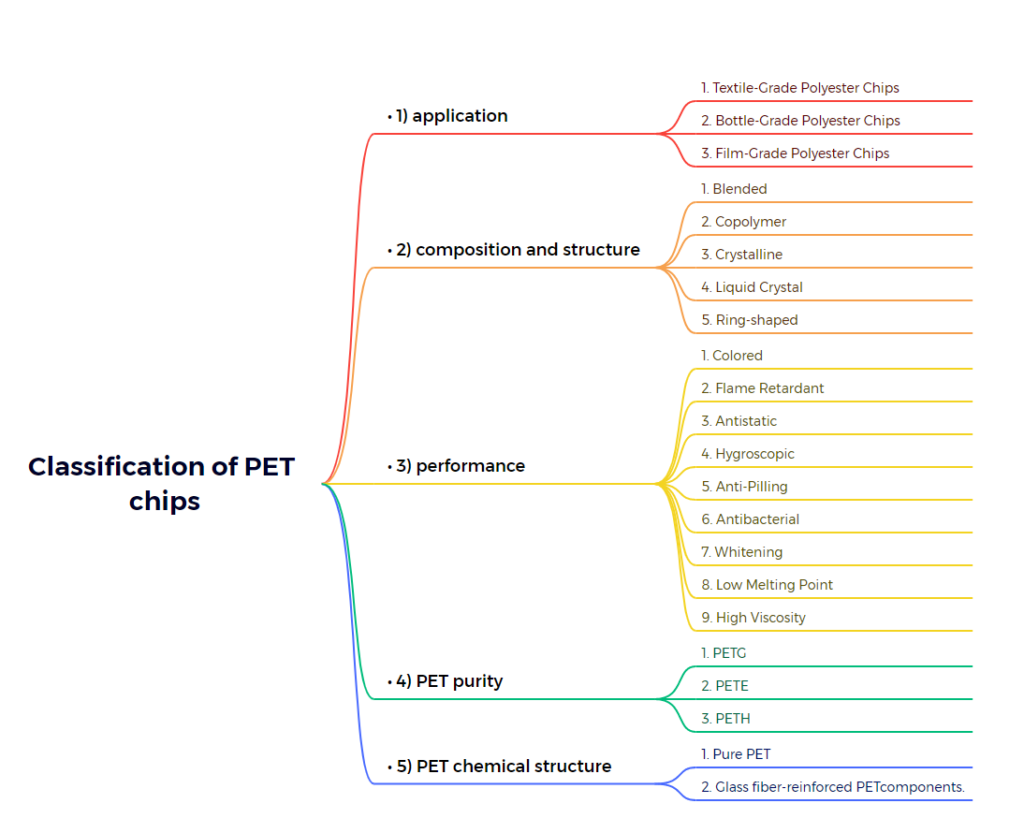
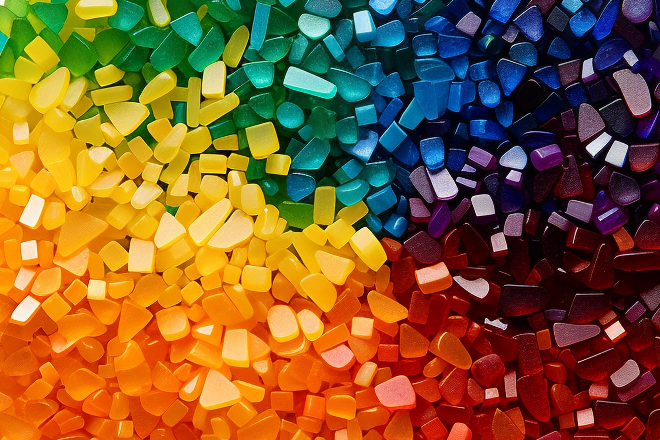

Polyethylene terephthalate (PET), abbreviated as PET, is a white granular solid formed by the polymerization of terephthalic acid (PTA) and ethylene glycol (EG). According to its application, composition, performance, purity and chemical structure, the calassfication is different.
Classification:
1) According to application
- Textile-Grade Polyester Chips: used in textiles, ropes, clothing
- Bottle-Grade Polyester Chips: used in plastic bottles, food containers, cosmetic bottles
- Film-Grade Polyester Chips: Used in packaging films, plastic bags, cling film
2) According to composition and structure
- Blended: Composed of different polymers blended together, combining various properties. Used in plastic products, composite materials, and packaging materials.
- Copolymer: Formed by the polymerization of multiple monomers, customizable for specific attributes.Used in plastic products, flexible materials, and sealing materials.
- Crystalline: Possesses a crystalline structure, offering high strength and rigidity. Used in high-strength components, and mechanical parts.
- Liquid Crystal: Features ordered molecular alignment, used in high-performance electronic materials.Used in display screens, electronic materials, and liquid crystal devices.
- Ring-shaped: Exhibits a ring-shaped molecular structure, utilized in special material research. Used in high-performance electronic devices, and material research.
3) According to performance
- Colored: Contains added color or dyes, suitable for colorful products. Used in colored plastic products, textiles, packaging.
- Flame Retardant: Possesses flame retardant properties, enhancing safety. Used in electronic devices, building materials, automotive components.
- Antistatic: Has antistatic characteristics, preventing static buildup.Used in electronic devices, antistatic packaging, cleanroom equipment.
- Hygroscopic: Absorbs moisture, suitable for humidity-sensitive applications.Used in medical devices, humidity-sensitive equipment, agricultural etc.
- Anti-Pilling: Resistant to pilling, maintaining appearance quality.Used in clothing, textiles, bedding.
- Antibacterial: Exhibits antibacterial properties, improving hygiene.Used in medical equipment, food packaging, textiles.
- Whitening: Provides whitening effects, enhancing visual appeal.Used in white plastic products, textiles, food containers.
- Low Melting Point: Has a lower melting point, used in heat-sensitive applications, like hot melt adhesives, sealing materials, thermosensitive materials.
- High Viscosity: Features high viscosity, improving adhesive performance.Used in adhesives, sealing materials, coatings.
4) According to PET purity
- PETG: Packaging, transparent parts, bottles, etc.
- PETE: Possesses higher heat resistance, suitable for microwave ovens and food containers, such as food containers, hot water bottles, thermoplastic engineering components.
- PETH: Offers improved impact strength and toughness, suitable for applications with bending and high impact loads, such as bottles, engineering components, electronic enclosures.
5) According to PET chemical structure
- Pure PET: without fillers or reinforced PET containing fillers like glass fibers.Used in bottles, fibers, films.
- Glass fiber-reinforced PET: provides higher rigidity and strength, suitable for structural parts.Used in mechanical components, automotive parts, ship components.
Here show all the classifications: