
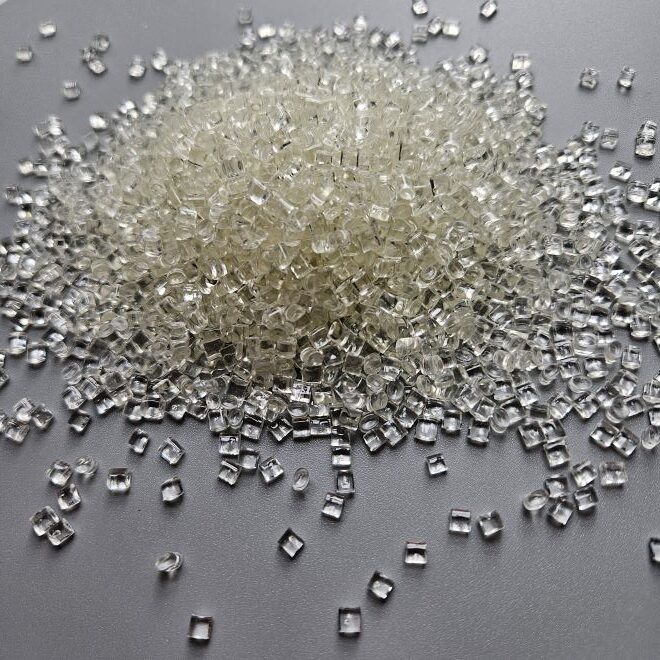

Low-melting-point PET fibers are increasingly used in hot-melt layers and automotive nonwoven fabrics. These fibers need a low melting point, good bonding, and strong mechanical properties. Adding diethylene glycol (DEG) helps achieve this. The LMPET, keeping DEG at 7% lowers the melting point while maintaining fiber performance. This article explains why controlling DEG at 7% is important for the fiber’s melting properties, stability, and overall performance.
1. Why need DEG-7%?
1.1 Lower Melting Point
DEG, as the fourth monomer, is a key component that reduces the crystallinity of the PET chain, lowering its melting point. With about 7% DEG, the melting point of PET drops to around 100°C-110°C. This is important for low-temperature melt fibers because it:
- Reduces energy use: The lower melting point lets fibers melt at lower temperatures. It saves energy and boosts production efficiency.
- Improves bonding: At lower temperatures, fibers bond easily with other materials (like nonwoven fabrics). It strengthens the layer adhesion and product durability.
1.2 Maintain Mechanical Properties
While DEG lowers the melting point, too much can weaken the fiber’s strength and toughness. By keeping DEG at 7%, fibers maintain their strength and toughness while lowering the melting point, ensuring good performance.
2. Why Not Too Much DEG?
2.1 Balance Between Low Melting Point and Mechanical Properties
If the DEG content exceeds 8%-10%, the arrangement of the PET molecular chains breaks down, leading to a drop in strength and durability. Controlling the DEG at 7% ensures a low melting point without sacrificing the fiber’s mechanical properties.
2.2 Ensure Processing Stability
Too much DEG can reduce the viscosity of the melt, making it harder to control the flow during spinning. It could lead to uneven fiber quality or production difficulties. A 7% DEG content helps maintain melt stability, ensuring smooth spinning.
2.3 Environmental and Cost Control
Too much DEG creates extra by-products, increasing waste and costs. Controlling DEG reduces waste and lowers production costs, benefiting both the environment and your budget.

3. Role of DEG at 7%
3.1 Enhance Interlayer Bonding
Low-melting fibers in hot-melt layers soften quickly at lower temperatures. So it bonds well with materials like nonwoven fabrics, which strengthens the layers. This is important for uses like filtration and insulation.
3.2 Optimize Hot-melt Processing
By lowering the melting point to around 100°C-110°C, DEG-7% fibers perform better in multi-layer bonding processes. It avoids damage to other materials and improves overall product performance.
3.3 Maintain Dimensional Stability
Fibers with 7% DEG cool and solidify quickly after melting, creating a stable structure. This keeps the final product stable in shape and strength, meeting strict quality standards.
4. Application Fields
4.1 Automotive Interior Nonwoven Fabrics
Low-melting PET fibers are used in automotive interior fabrics like headliners and sound insulation materials due to their strong bonding and durability. It meets the high strength and comfort needs of car interiors.
4.2 Hot-melt Nonwoven Fabrics
In filtration and insulation applications, DEG-7% fibers simplify processing and improve product performance.
4.3 Composite Materials
Low-melting PET fibers can melt at low temperatures and bond effectively with layers of different materials. This makes them ideal for the production of multifunctional composite materials. As it improves the overall product performance.
5. Conclusion
Low-melting PET( its production click here) with 7% DEG content helps lower the melting point, improve bonding, and maintain stability during processing while keeping the fiber’s strength. These fibers are widely used in hot-melt layers and automotive nonwoven fabrics, meeting complex performance needs. Controlling the DEG content improves production efficiency, reduces costs, and provides both high performance and environmental benefits. DEG-7% in spinning-grade PET chips is crucial for modern fiber production.